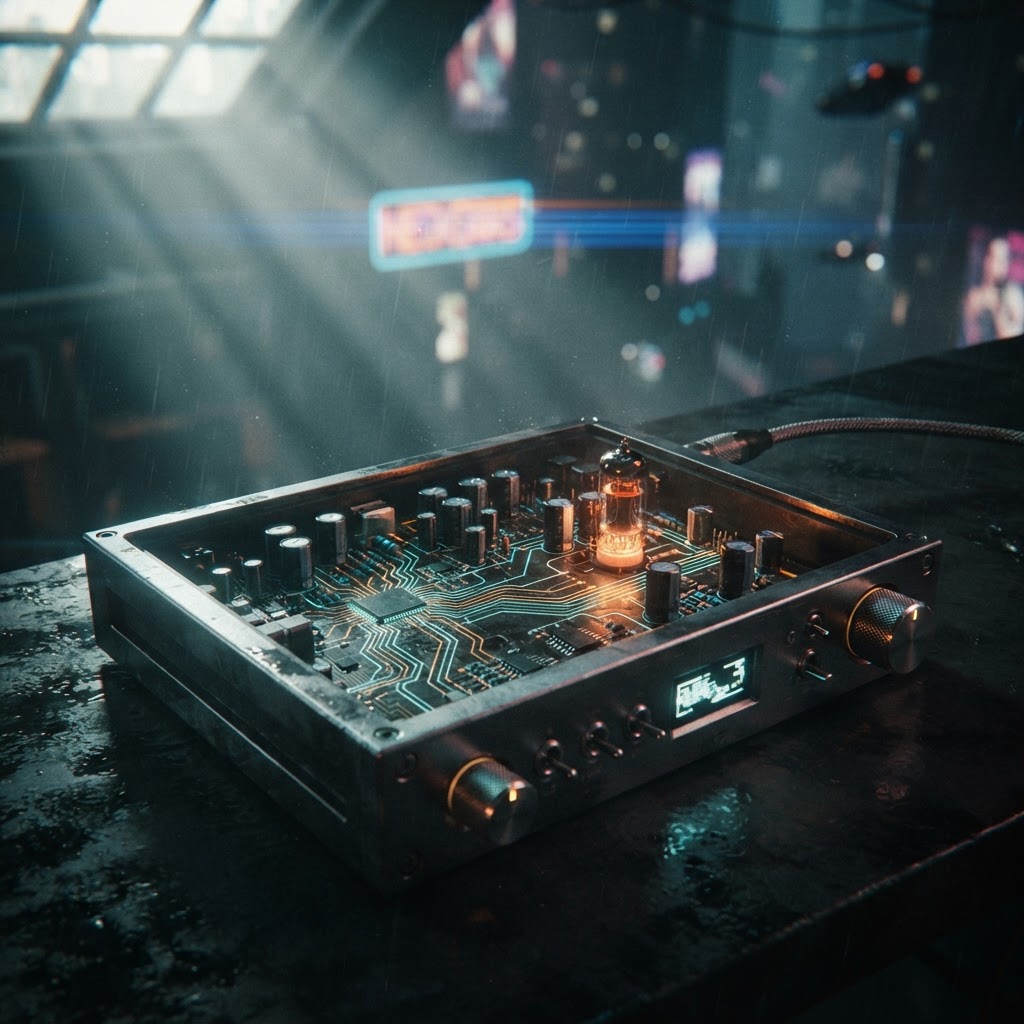
The Invisible Architect of Your Sound
To the uninitiated, a DJ set is merely a playlist curated in real-time. To the professional, it is a masterclass in electrical engineering and acoustic physics. Whether you are aiming for the raw, industrial grit of a Bergen-style warehouse set or the polished, melodic fluidity characteristic of an Ibiza residency, your sound is only as good as the weakest link in your signal chain. At the center of this transformation lies the Digital-to-Analog Converter (DAC).
Most DJs spend hours curating crates but ignore the hardware that translates those bits into physical pressure waves. In a professional environment, this translation determines whether your kick drum punches through the sub-bass or muddies the mid-range. This is precisely why training on a professional dj studio miami setup is non-negotiable for anyone serious about their sonic signature.
Understanding the DAC: The Bridge Between Bits and Bass
Every track you load onto a Pioneer CDJ-3000 is essentially a digital file—a sequence of zeroes and ones. To reach the audience, this data must be converted into an analog voltage that the speakers can interpret. A high-quality DAC, like the ones integrated into the DJM-V10 mixer, does this with surgical precision, maintaining the harmonic integrity of your files.
When you play in a club, the sound system acts as a magnifying glass. If your practice sessions at home are conducted on budget consumer-grade soundcards, you are likely missing the micro-details of compression and saturation.
"The difference between a amateur mix and a professional set is often just the resolution of your monitoring. When the DAC is clean, the room stays tight."
Why Hardware Quality Defines Your Professional Edge
If you are serious about playing at festivals like DC-10 or Berghain, you need to hear exactly how your tracks respond to high-fidelity equipment. The CDJ-3000 and DJM-V10 combination provides a transparent signal path that reveals the true color of your music.
-
Signal Transparency: Low-end quality DACs introduce 'jitter,' which creates a blurry soundstage. Top-tier hardware eliminates this, ensuring the transients are crisp.
-
Dynamic Range: Professional converters handle high-volume transients without clipping, preserving the 'headroom' essential for dramatic build-ups.
-
Harmonic Depth: A superior DAC preserves the warmth in the lower mid-range, which is vital for deep house and minimal techno tracks.
-
Phase Alignment: Accurate conversion ensures that your low-frequency transients—your kick and bass—stay phase-aligned, preventing the 'hollow' sound often heard on improper systems.
PRO TIP: The 32-Bar Rule for Fidelity
When you are testing tracks at a dj practice room miami, spend at least 32 bars listening to the interaction between the basslines. If the sub feels 'smeared' across the spectrum, your gain staging or DAC quality is likely failing you. Professional studios ensure you hear these flaws before the crowd does.
Bringing the Berlin and Ibiza Ethos to South Florida
Look at the pioneers of the scene—artists like Ben Klock or the Keinemusik collective. They do not just show up to play; they understand the technical infrastructure of the booth. They know that the booth is a laboratory. When you book a session at Sonic Spectrum, you are not just renting space; you are accessing an industry-standard environment where the gear is calibrated to reveal the truth in your music.
If you have been practicing in a bedroom with subpar monitors, you are likely mixing in the dark. You are missing the subtle textures in your EQing that make the difference between a functional transition and a memorable moment on the dancefloor. Mastering the signal chain is a rite of passage for any artist looking to transition from the bedroom to the club.
Elevate Your Sound Today
Theoretical knowledge is only the start. To truly understand how hardware affects your sonic output, you need to get behind the industry-standard gear that defines the global underground scene. Whether you are refining your set for a peak-time slot or learning the nuances of harmonic mixing, your environment matters.
Stop compromising on your sound. Visit Sonic Spectrum at 13028 SW 120th St to book your studio time today. Practice on the exact Pioneer setup used by the world’s elite and hear the difference that high-fidelity conversion makes in your mixes.
 FOLLOW US