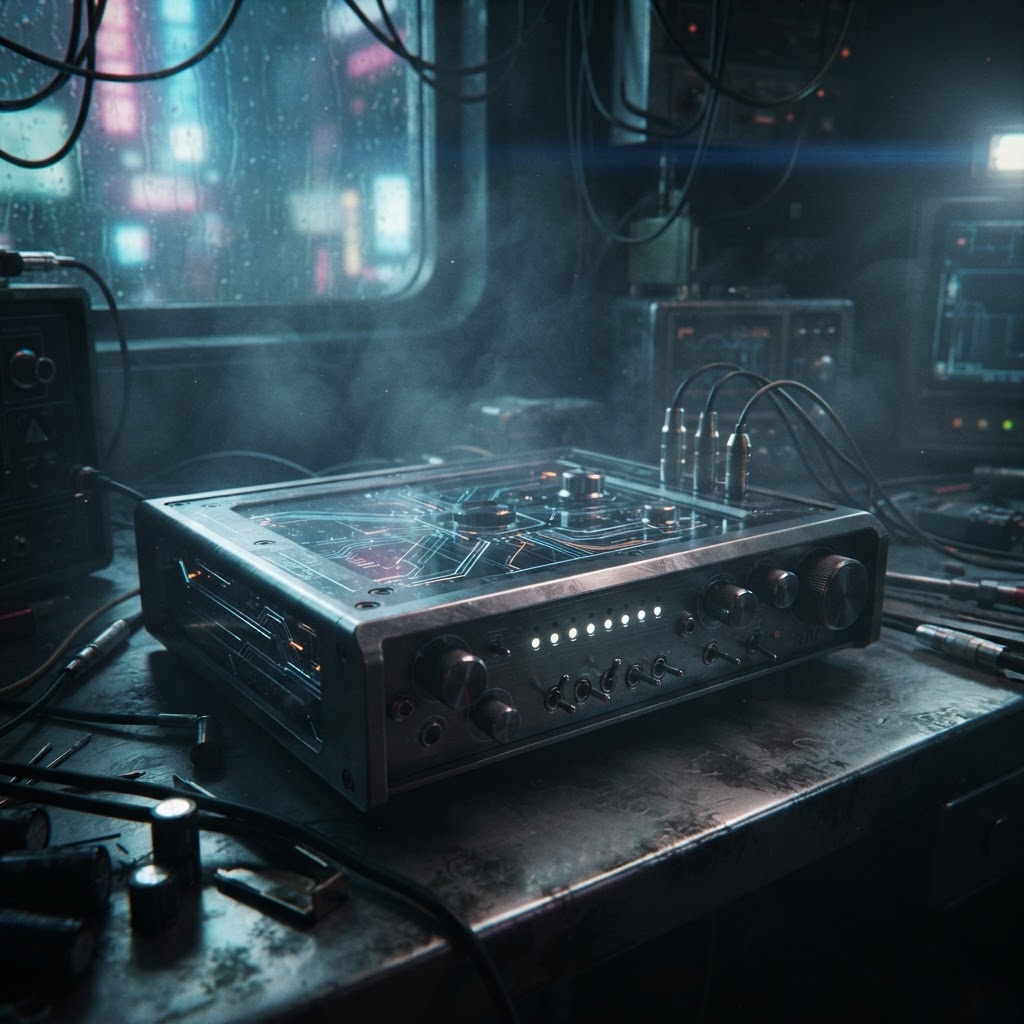
In the high-stakes world of modern clubbing, from the industrial vaults of Berlin's Tresor to the sun-drenched terraces of Ibiza, the difference between a good set and a transcendent one often hides in the shadows of signal processing. Many DJs obsess over track selection and loop layering, yet they neglect the most critical bridge between their digital library and the club's massive sound system: the Digital-to-Analog Converter (DAC).
At its core, the DAC is the translator. It takes the binary code of your digital files—those meticulously organized WAVs—and turns them into the electrical voltage that moves speakers. If your signal path is muddy, the most sophisticated mixing technique in the world will arrive at the main room speakers sounding thin, brittle, or distorted.
"The signal chain is only as strong as its weakest link. If you are playing on sub-par converters, you are essentially performing with a veil over your sound."
The Technical Necessity of High-End Conversion
When you play in a professional environment, you are dealing with high-resolution audio conversion. The internal processing of the Pioneer CDJ-3000 and the DJM-V10 mixer is industry-standard for a reason. These units utilize advanced 32-bit converters that maintain the phase integrity and frequency response of your source audio, ensuring that the crisp highs of a hi-hat or the sub-bass weight of a techno kick remain punchy and defined.
If you are serious about your sound, you must experience how these high-fidelity systems react to your gain staging. Practicing on consumer-grade controllers at home often masks these nuances, which is why booking a dj practice room miami at Sonic Spectrum is a non-negotiable step for any professional.
Three Reasons Your DAC Choice Matters for the Dancefloor
-
Transient Response: A quality converter captures the 'attack' of drums. In fast-paced genres like those championed by Kobosil or SPFDJ, precise transients are what make a track feel physical and aggressive rather than flat.
-
Dynamic Range: Superior converters allow for a wider perceived space between the quietest and loudest elements. This creates the 'depth' that defines the sound of a Ben Klock marathon set, where the mix feels like a living, breathing entity.
-
Jitter Reduction: In digital audio, jitter—a timing error in the clock signal—can cause harshness and harmonic distortion. High-end hardware minimizes this, ensuring your playback is as clean as the original master.
PRO TIP: The Gain Staging Check
Always monitor your levels on the DJM-V10’s channel meters. Even with elite converters, pushing the digital gain into the red will introduce unwanted clipping before the sound even reaches the analog output stage. Keep your headroom healthy.
Bridging the Gap Between Digital and Physical
Understanding your gear is the hallmark of a seasoned selector. Much like the resident DJs at Watergate or DC-10 who have spent thousands of hours mastering their local sound systems, you need to understand how your music responds when passed through professional-grade conversion. When you step into a dj studio miami, you aren't just practicing tracks; you are auditing your entire library against a benchmark of absolute clarity.
Elevate Your Sound at Sonic Spectrum
Technical knowledge is half the battle; the other half is tactile familiarity. You cannot fully grasp the sonic weight of your music until you have pushed it through the signal chain of a world-class setup like the one found here at 13028 SW 120th St. Our studio offers the exact environment required to refine your sound, whether you are preparing for a festival debut or mastering the intricate transitions of an extended club set.
Stop practicing in the dark. Book your session at Sonic Spectrum today to experience the industry-leading fidelity of our CDJ-3000 and DJM-V10 setup. Secure your studio time now and ensure that when you hit the booth, your sound is nothing short of flawless.
 FOLLOW US