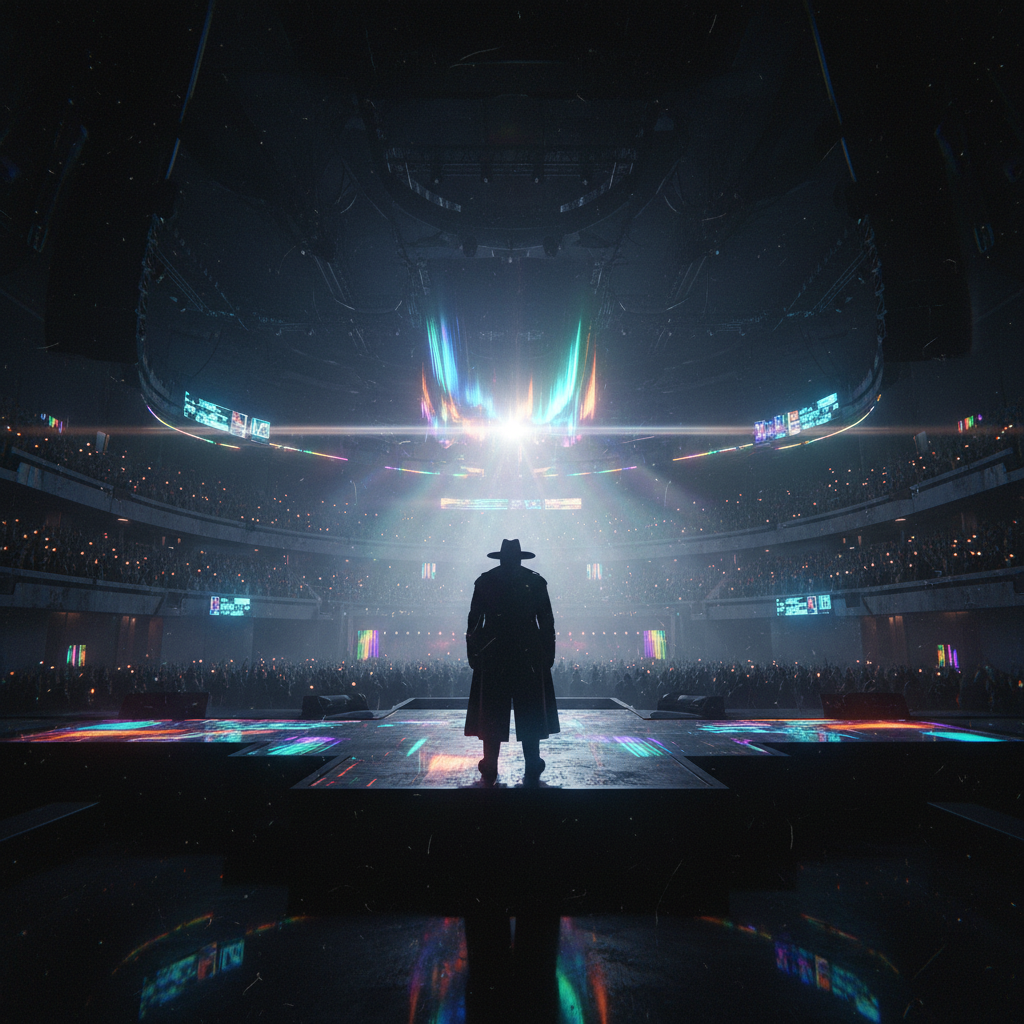
The Architect of the Groove: Why Frankie Knuckles Still Matters
In the pantheon of dance music, few names command as much reverence as Frankie Knuckles. Often referred to as the 'Godfather of House,' Knuckles didn't just play records; he engineered an atmosphere that redefined the relationship between the booth and the floor. For the modern selector stepping into a DJ studio in Miami, understanding Frankie’s philosophy is more than a history lesson—it is a technical necessity.
To understand Frankie is to understand the soul of the machine. While many today associate house music with aggressive drops and high-energy transitions, Frankie’s style was rooted in the Philadelphia Soul and Salsoul records of his youth, blended with the emerging industrial pulse of European electronic music. This fusion required a level of technical finesse that modern artists often overlook.
"The dancefloor is not a place for perfection. It's a place for truth. You have to give people something they can feel in their bones, not just hear in their ears."
From the Bronx to the Warehouse
Born in the Bronx, Frankie's journey began alongside his lifelong friend Larry Levan at the legendary Continental Baths. However, it was his move to Chicago in 1977 to helm The Warehouse that changed the course of music history. It was here that the term 'House' was coined—a shorthand for the unique, soulful, and driving sound Frankie pioneered.
At the time, the technology was primitive compared to the Pioneer CDJ-3000 practice sessions available today. Frankie was working with early Technics turntables and rudimentary mixers, often having to use reel-to-reel tape decks to extend drum breaks or create his own edits. This 'do-it-yourself' technical spirit is what drove him to integrate the Roland TR-909 drum machine into his live sets, layering a consistent 4/4 kick over disco records that were notoriously difficult to beat-match.
The Sound of Spiritual Elevation
Frankie’s signature was the 'long blend.' Unlike the quick-cut styles seen in some modern EDM sets, Frankie favored transitions that could last minutes. He was a master of EQ sculpting, slowly introducing the low-end of a new track while letting the vocals of the outgoing record linger. This required an intimate knowledge of his gear—a mastery that every serious artist should aim for when booking studio time in Miami.
When you step into a professional environment like Sonic Spectrum, the goal is to replicate that level of control. The clarity provided by the Pioneer DJM-V10 mixer allows for the same surgical frequency isolation that Frankie used to create seamless, spiritual journeys on the dancefloor.
Essential Landmark Releases
To truly appreciate the Knuckles sound, one must study his discography not just as a listener, but as a producer. Here are four tracks that define his legacy:
- 'Your Love' (1987): Originally a collaboration with Jamie Principle, this track features one of the most iconic synth arpeggios in history. It’s a masterclass in tension and release.
- 'The Whistle Song' (1991): A perfect example of his 'Director’s Cut' style—sophisticated, melodic, and undeniably chic.
- 'Tears' (1989): Produced alongside Satoshi Tomiie, this track brought a deep, emotional vulnerability to the club floor that was revolutionary for its time.
- 'Baby Wants to Ride' (1987): A driving, provocative club anthem that showcased his ability to blend social commentary with a relentless groove.
The Technical Approach: Building the Journey
Frankie was known for his 'programmatic' approach to DJing. He didn't just play tracks; he told a story. This involved a deep understanding of harmonic mixing and energy management. He would often start a night at 100 BPM and gradually build the room over six to eight hours.
KEY TECHNIQUE: The 'Knuckles' Frequency Layering To practice this at a dj studio rental in Miami, select two tracks with similar melodic keys. Use the CDJ-3000's master tempo to keep them perfectly synced. Bring the second track in with the lows and highs completely cut, leaving only the 'soul' (the mids). Over the course of 64 bars, slowly swap the bass frequencies. The audience shouldn't know the song has changed until the new vocal hits.
What Miami DJs Can Learn from the Godfather
The Miami scene is often characterized by its high-gloss, high-energy atmosphere. However, the most successful DJs in the city—those who headline the terraces at Club Space or the dark corners of Do Not Sit On The Furniture—are those who understand the 'Frankie Philosophy.'
Technical Precision: Frankie’s sets were flawless because he knew his equipment inside and out. For a Miami DJ, this means moving beyond the 'Sync' button. It means coming to Sonic Spectrum to engage in cdj-3000 practice miami sessions where you can hear every nuance of your mix through professional monitoring.
Musicality Over Hype: Frankie proved that you don't need a massive drop every two minutes to keep a crowd. By focusing on the groove and the emotional arc, he created a more sustainable energy. This is a vital lesson for anyone taking dj lessons in Miami—the ability to read a room and play 'the long game' is what separates a local opener from a global headliner.
The Call to the Booth
Frankie Knuckles left us in 2014, but his blueprint remains the gold standard for house music. He showed us that the DJ booth is a sanctuary, a place where technical skill meets spiritual expression. But that skill is not innate; it is forged through hours of solitary practice on the world’s best equipment.
For those serious about their craft in South Florida, the path is clear. To play like a pro, you must practice like a pro. Whether you are prepping for a set at a beach club or recording a 4K dj recording in Miami to send to international labels, the gear matters.
Ready to channel the spirit of the Warehouse? Book your next practice session at Sonic Spectrum, Miami’s premier DJ studio rental at 13028 SW 120th St. Experience the precision of the CDJ-3000 and the DJM-V10 in a space designed for the city's most dedicated selectors. Elevate your sound today.
 FOLLOW US