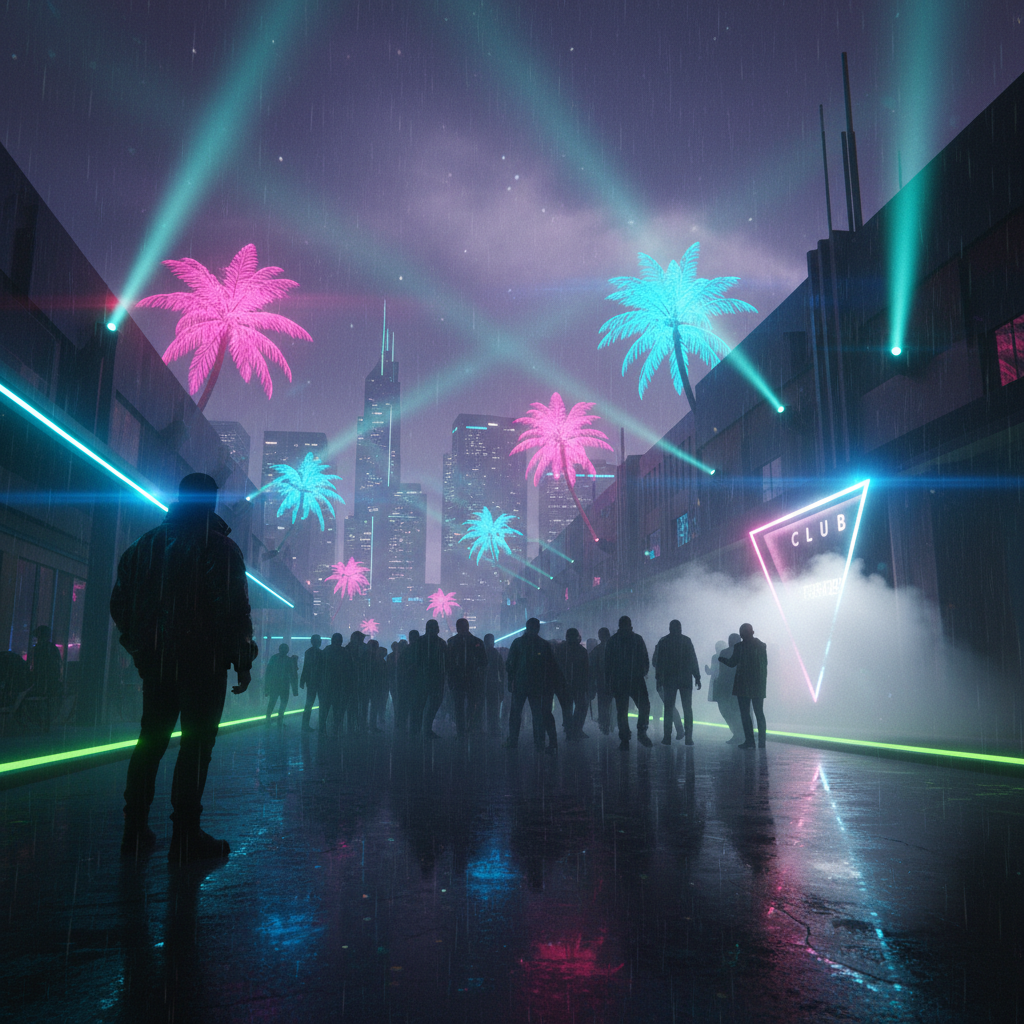
There's a strobe light flickering somewhere between 1992 and right now. You can feel it in the records being pulled from forgotten crates, in the warehouses being reclaimed by promoters too young to have attended the first wave, and in the sets being played on Pioneer CDJ-3000s that would've seemed like science fiction to the kids who first heard the acid bassline of "Voodoo Ray" in a field outside Manchester.
Rave culture in 2026 is not a resurrection — it's a reckoning. And if you're a DJ in Miami, you're standing at the epicenter of one of the most creatively fertile moments in electronic music history.
The Nostalgia Engine: Why the '90s Never Really Left
Nostalgia in electronic music operates differently than in other genres. There's no radio hit to trigger the memory — it's tactile. It lives in the weight of a record, the smell of dry ice, the specific way a Roland TB-303 cuts through a room at 2 a.m. The current revival isn't simply retro cosplay; it's a generation of producers and DJs who grew up hearing these sounds through older siblings, mixtapes, and eventually SoundCloud uploads, now building fluency with tools that allow them to push those sounds into genuinely new territory.
"The current revival isn't simply retro cosplay; it's a generation of producers and DJs... building fluency with tools that allow them to push those sounds into genuinely new territory."
Artists like Blawan, Shackleton, and the entire industrial-rave axis of the Perc Trax and Mord catalogs have been quietly laying groundwork for this moment for over a decade. What's changed in 2026 is the mainstream absorption — artists like Overmono crossing into festival headline slots, UK hardcore edits appearing in sets from Ibiza to Miami's underground club circuit, and labels like Shall Not Fade and Lobster Fury achieving genuine cultural cachet among a generation that streams everything but fetishizes vinyl.
PRO TIP: Tactile History Don't just stream history; feel it. The specific way a Roland TB-303 cuts through a room at 2 a.m. is a tactile experience that defines the weight of the genre and connects the past to the present.
The Evolution: What's Actually New in 2026 Rave Culture
The revival is real, but calling it purely nostalgic undersells what's happening. The sonic palette has expanded dramatically. Producers are fusing the breakbeat scaffolding of '90s rave with West African rhythmic structures, Brazilian baile funk time signatures, and the hypnotic drone sensibility of contemporary ambient music.
The result is something that feels euphoric in the classic sense — communal, transcendent, physically overwhelming — but sounds entirely of this decade.
Technically, the tools enabling this evolution are extraordinary. The Pioneer CDJ-3000 has fundamentally changed what's possible in a live DJ context. Its expanded waveform display, hardware-accelerated streaming, and key sync precision allow DJs to blend tracks across tempos and keys that would've required surgical skill — or lucky ears — to marry in the analog era.
PRO TIP: Elevating Creative Risk The ceiling on creative risk has been raised. The DJs winning in 2026 are the ones exploiting the technical precision of modern hardware to attempt transitions that were previously impossible.
This isn't about removing challenge; it's about relocating it. The ceiling on creative risk has been raised, and the DJs winning in 2026 are the ones exploiting that ceiling aggressively.
The Miami Factor: Why This City Is Built for This Moment
Miami has always had a complicated but electric relationship with rave culture. The city's demographics — the Venezuelan, Colombian, Cuban, Haitian, and Jamaican communities each with their own rhythm traditions — mean that electronic music here has never been purely European. Miami bass was always a rawer, harder, more sexually confrontational mutation of the same impulse that built the UK warehouse scene. In 2026, that hybrid DNA is an asset.
"Miami bass was always a rawer, harder, more sexually confrontational mutation of the same impulse that built the UK warehouse scene."
The underground circuit in Miami — threading through Wynwood, Little Haiti, and into pop-up events across the Miami-Dade metro — is currently producing some of the most interesting rave-adjacent programming in North America. Local DJs are playing extended sets that move freely between UKG, hard trance, electroclash revivals, and contemporary tech-house, using the CDJ-3000's ability to handle high-BPM transitions with surgical control. The city's demand for skill is real, and the margin between a memorable set and a forgettable one is measured in preparation.
How to Position Yourself for the Revival: Practical Steps for Miami DJs
Understanding the cultural moment is only valuable if it sharpens your practice. Here's what separates the DJs capitalizing on the rave revival from those watching from the sidelines:
- Build a genre-fluid record box. The DJs winning 2026 bookings don't play one tempo, one era, or one vibe. Curate across '92-'95 rave, contemporary breaks, and hypnotic techno. The connective tissue is energy arc, not genre label.
- Master harmonic mixing at speed. The CDJ-3000's key display is a tool, not a crutch. Know your Camelot wheel cold. Practice modulating energy through key changes deliberately — the rave tradition is built on tension and release, and harmonic movement is a primary lever.
- Study long-form structure. Classic rave DJs played two-to-four-hour sets that built like architectural blueprints. Playlist-length thinking doesn't survive in that format. Rehearse full sets, not transitions in isolation.
- Get real studio time. None of this theory crystallizes without repetition on professional gear. Practicing at a professional Miami DJ studio — on actual CDJ-3000s running into a DJM-V10 — is the difference between conceptual understanding and muscle memory.
PRO TIP: Professional Rehearsal At Sonic Spectrum in Southwest Miami, you're not just renting a room. You are rehearsing in the exact technical environment you'll perform in, ensuring your muscle memory is stage-ready.
The Long Arc: Craft as the Constant
Rave culture has survived moral panics, venue closures, genre fragmentation, and the complete collapse and rebuilding of the music industry twice over. What persists isn't a specific sound or a fashion moment — it's the discipline of the DJ as a conduit for collective experience. In 2026, that discipline requires fluency with both history and technology, both analog feeling and digital precision.
The revival isn't happening to you. It's happening for you — if you're prepared to meet it. Book the studio time. Study the records. Know the gear. Miami is one of the few cities in the world where the cultural infrastructure, the audience appetite, and the technical resources are all aligned at the same moment. The only question is whether you're ready.
 FOLLOW US