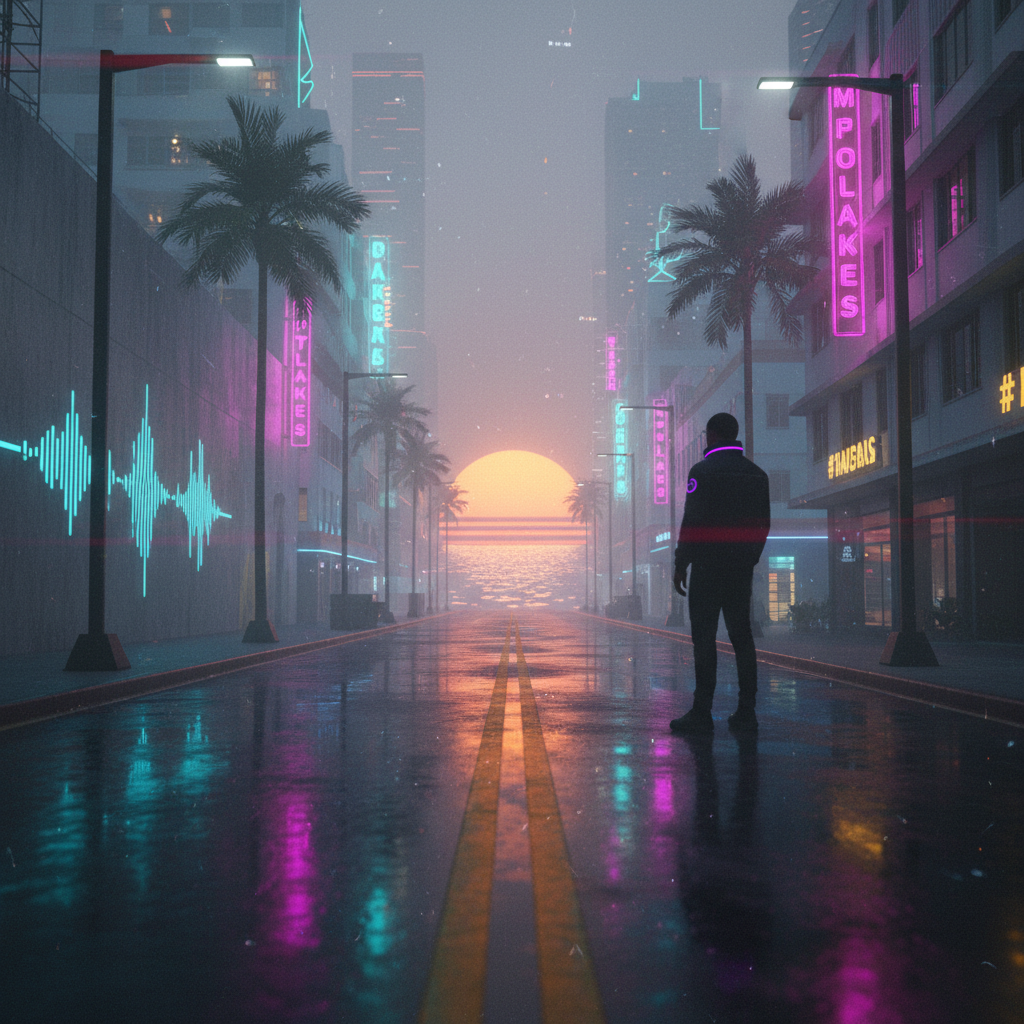
Before Berlin had Berghain. Before Ibiza became a brand. Before a single festival wristband cost more than a flight, there was Miami — sweating through a warehouse on a Tuesday night, rewriting the rules of what electronic music could be and who it was for. Miami didn't just participate in the global electronic music story. It authored several of its most critical chapters. And for DJs operating in this city today, understanding that legacy isn't nostalgia — it's a competitive advantage.
"The clave was in the kick drum. The congas lived inside the synthesizer. This wasn't coincidence — it was geography expressing itself through frequency."
The Roots: Freestyle, Hi-NRG, and the Latin Underground
Long before "electronic music" became a marketing category, Miami was already doing the work. In the early 1980s, the city developed its own strain of urban dance music — Miami Bass and Miami Freestyle — that was unapologetically local in flavor but globally potent in influence. Artists like Pretty Tony, Expose, and The Cover Girls were moving units nationally while the sound stayed rooted in the rhythm of a city built between the Atlantic and the Everglades.
The Latin undercurrent was never incidental. Miami's bilingual, bicultural identity gave its electronic music a polyrhythmic complexity that Northern producers simply couldn't replicate. The rhythm was baked into the DNA of the city's nightlife, creating a standard for energy that would eventually define the global stage.
PRO TIP: Understanding Poly-Rhythms To master the Miami sound, study how Latin percussion interacts with a standard 4/4 beat. Incorporating these syncopated elements can help your sets stand out in a global market saturated with more rigid rhythmic structures.
The Ultra Effect: How One Festival Rewired Global Dance Culture
When Ultra Music Festival launched in 1999 on the sands of Bayfront Park, nobody predicted it would become one of the most influential music events on the planet. Twenty-five years later, Ultra has expanded to over 30 countries, but its spiritual headquarters remains Miami — specifically the weekend that now anchors Miami Music Week, the single most important gathering in the global DJ and producer calendar.
Miami Music Week is where careers are made in 72 hours. It's where labels sign artists in hotel lobbies, where a set at a rooftop in Brickell can land you a residency in Amsterdam. For working DJs in South Florida, this isn't abstract — it's the annual reminder that the world is watching this city, and that technical readiness is non-negotiable when the moment comes.
That's why serious Miami DJs invest in practicing at a professional Miami DJ studio year-round, not just in the weeks before a big gig. When the room is full of industry, you don't get second takes.
The Gear That Built the Sound: From Technics to Pioneer CDJ-3000
Miami's club infrastructure has always punched above its weight. From the legendary Space Miami — its open-air terrace a rite of passage for every DJ with serious ambitions — to Floyd Miami and Club Space's current reign, the technical standards set by Miami's rooms have always been high. The city's club culture demanded precision: tight mixes, sharp EQ decisions, and the kind of fluid beatmatching that only comes from hours logged on professional equipment.
Today, the industry standard is the Pioneer CDJ-3000 and DJM-V10 mixer — the same setup you'll find in the world's most respected booths. The CDJ-3000's 9-inch touchscreen, MPU-3000 processor, and enhanced waveform display aren't luxury features; they're the new baseline.
"If you're preparing for a serious gig in Miami — or anywhere — and you haven't put in real hours on a CDJ-3000, you're walking into a professional kitchen having only ever cooked at home."
At Sonic Spectrum, Miami's premier DJ studio at 13028 SW 120th St, practitioners get exactly that: a proper CDJ-3000 + DJM-V10 setup in a professional environment, available for practice sessions at $90 for two hours. It's the closest thing to actual booth time without the crowd watching your every move.
The Cultural Geography: Why Southwest Miami Is the New Epicenter
Miami's electronic music identity has always been geographically complex. The beaches draw the tourists; the studios and the serious players operate inland. Kendall, Doral, Hialeah, Coral Gables — these are the neighborhoods where the real culture lives and breathes, where producers are up at 3am finishing tracks, where DJs are refining transitions in practice rooms rather than performing them for the first time in front of a crowd.
Southwest Miami in particular has emerged as a quiet incubator of talent. Far from the spectacle of South Beach, it operates on craft rather than optics — and that's exactly the energy that produces world-class DJs. This is the Miami that the global electronic music industry doesn't always photograph, but absolutely depends on.
PRO TIP: Practice Where You Perform Always seek out studio time on the exact hardware used in major venues. Technical fluency on the DJM-V10 and CDJ-3000 allows you to focus on your creative performance rather than fumbling with the interface during a high-stakes set.
What Miami's Legacy Demands of You Right Now
Every genre that Miami touched — bass music, freestyle, tribal house, progressive trance, tech house — left behind a lesson about identity. Miami's most enduring contribution to electronic music isn't a specific sound; it's a philosophy: know your roots, master your tools, and play with conviction.
For a DJ in Miami today, that philosophy has a practical application. It means understanding the lineage you're inheriting — from the warehouse raves of the '90s to the festival main stages of today. It means developing the kind of technical fluency that lets you express ideas, not just execute them.
And it means putting in the work somewhere that takes the craft as seriously as you do. Miami shaped the world's dancefloors. The only question is what you're doing to shape yours.
 FOLLOW US