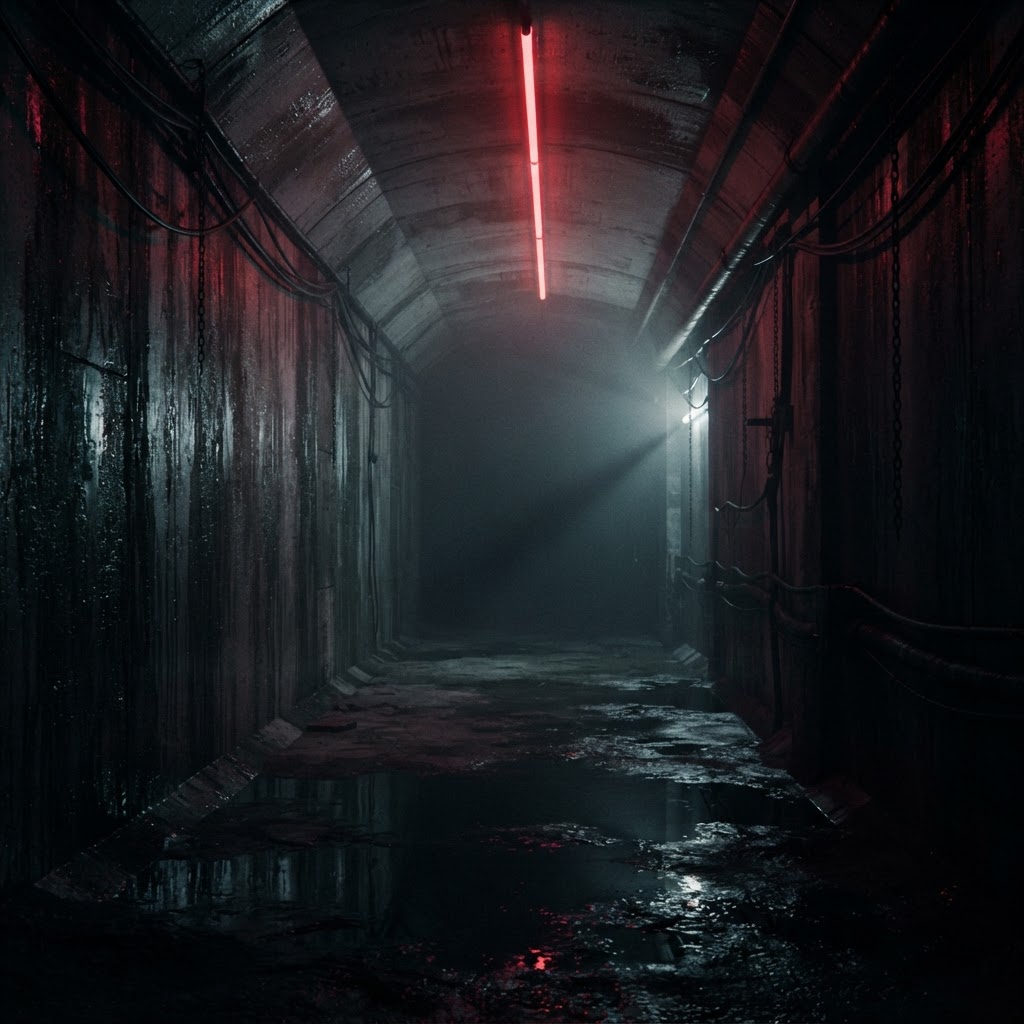
Who Is Basic Channel?
In the history of electronic music, few entities possess the mythical status of Basic Channel. Founded in the early 1990s by Mark Ernestus and Moritz von Oswald, this Berlin-based project didn't just release music; it established a sonic geography. Emerging from the post-Wall void of Berlin, they merged the cold, machine-driven pulse of Detroit techno with the thick, atmospheric weight of Jamaican dub. They are the architects of a sound that prioritizes depth over surface, texture over hooks, and the infinite possibilities of the frequency spectrum.
For a serious DJ, Basic Channel is not merely a label or a duo—they are a masterclass in minimalism. They taught the world that a single, well-processed loop could contain an entire universe of sound, provided you have the patience to listen and the technical rigour to manipulate it properly.
The Sound Explained
To understand their sound, you must embrace the philosophy of the infinite loop. Unlike the linear, chorus-heavy productions of mainstream house, their tracks feel like living, breathing organisms. They utilize aggressive tape saturation, extreme low-pass filtering, and delay lines that ripple through space, creating a sense of physical weight that demands a high-fidelity sound system to be fully appreciated.
"The secret isn't in the complexity of the arrangement; it is in the depth of the frequency response. Basic Channel tracks are designed to move air, not just ears."
Their music operates in the 'dub-techno' pocket—a space where the kick drum serves as an anchor and the reverb trails serve as the narrative. It is a masterclass in restraint, proving that you can say more with one snare hit treated through a vintage Roland Space Echo than with a hundred digital synthesizers.
Origins & Influences
Deeply tied to the Hard Wax record store in Berlin, the duo acted as a bridge between the Detroit Techno pioneers like Jeff Mills, Robert Hood, and Mad Mike Banks and the burgeoning European club scene. They were instrumental in shaping the aesthetic of venues like Tresor, turning the basement vaults of Berlin into shrines for industrial, dub-drenched soundscapes. Their influence flows through labels like Chain Reaction, Echocord, and Modern Love, consistently pushing the envelope of how physical space interacts with digital and analog synthesis.
Key Records & Essential Listening
-
"Radiance" (Basic Channel, 1994) — A sprawling, immersive piece of dub-techno that demonstrates the power of long-form, evolving textures.
-
"Phylyps Trak II" (Basic Channel, 1993) — A masterclass in rhythmic drive, featuring a distorted, hypnotic kick drum that became a blueprint for Berlin techno.
-
"Q1.1/I" (Basic Channel, 1993) — Where the influence of Jamaican dub reaches its peak, utilizing cascading delays that define the genre's aesthetic.
-
"Octagon" (Basic Channel, 1994) — A lesson in tension and release, featuring stripped-back percussion that forces the listener to lock into the groove.
The DJ Craft: How They Play
When listening to a DJ set built on this ethos, notice the absence of 'drops.' The music does not rely on sudden changes; it relies on the slow, surgical transition between layers. A skilled DJ treats these tracks as raw materials, using the EQ to carve out space, letting the high-hats of one track dance with the sub-bass of another for minutes at a time. This style of mixing requires an intimate knowledge of your mixer's headroom and the specific harmonic response of your hardware.
WHAT TO PRACTICE: The Frequency Sculpting Technique
Load two tracks with heavy low-end textures. Using the EQs on a DJM-V10, keep the mid and high frequencies locked while slowly swapping the low-end of both tracks over the course of 64 bars. Focus on maintaining a consistent energy level without ever losing the groove.
Why This Sound Matters for Your DJ Development
Studying Basic Channel is a remedy for the 'instant gratification' culture of modern DJing. It teaches you that true control is gained through deliberate repetition and technical precision. When you practice these techniques on industry-standard CDJ-3000 units and a high-end mixer, you develop a muscle memory for how tracks react to frequency attenuation. This isn't just about playing tracks; it's about sculpting a set that feels like a singular journey.
Professional practice is a necessity for the modern selector. At Sonic Spectrum, our studio provides the exact acoustic environment and club-standard gear needed to replicate these complex, long-form mixes. If you want to move beyond simple beat-matching and start playing rooms like a veteran, consistent time at the desk is non-negotiable.
How to Start Digging
- Dive into the Chain Reaction label discography for the evolution of the sound.
- Explore the Hard Wax archives online for deep cuts and production insights.
- Listen to mixes from artists like DVS1 or Marcel Dettmann, who carry the torch of this dub-influenced techno heritage.
- Visit the Basic Channel official site to explore their history of vinyl production and analog engineering.
Ready to elevate your sound? Book your next session at Sonic Spectrum today and master the art of the long-form blend on our CDJ-3000 setup.
 FOLLOW US