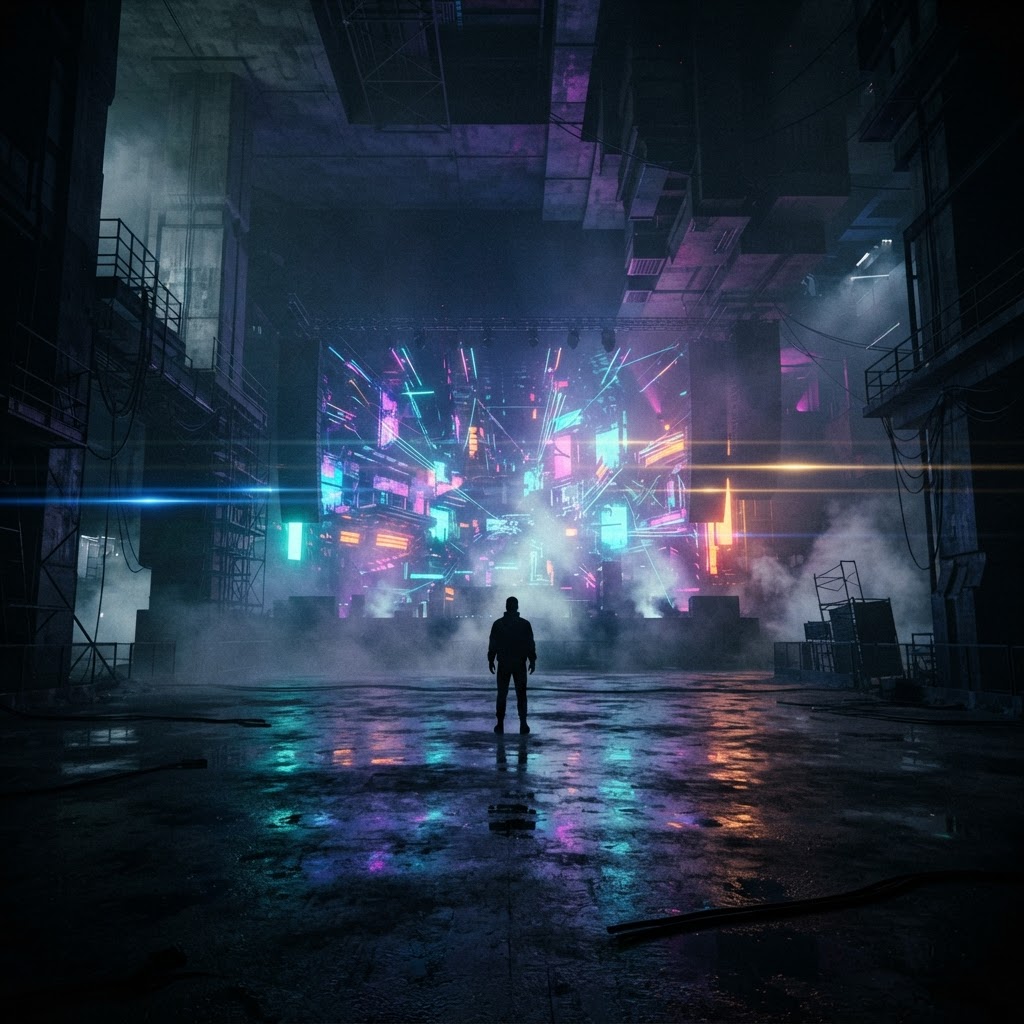
Stepping onto the elevated terrace of Amnesia Ibiza, the concrete sanctuary of Berghain's Panorama Bar, or into an elite Miami club booth demands more than exquisite curation. It requires absolute, unshakeable technical command. In a high-pressure live setting, the glossy illusions of home bedroom software vanish instantly. The acoustic environment shifts violently, monitoring systems push raw SPL, and transient club sound exposes every micro-flaw in your mix.
To survive—and truly conquer—a high-stakes live set, you need the muscular memory that comes from rigorous rehearsal on club-standard gear. Before you step into the booth, these are the five non-negotiable fundamentals you must internalize.
1. Manual Beatmatching and Phase Correction by Ear
The digital convenience of the sync button has transformed performance efficiency, but relying on it is professional Russian roulette. When emergency strikes—a corrupted Rekordbox beat grid, an un-analyzed VIP dubplate, or a drifted tempo—you cannot afford panic.
Manual beatmatching is the bedrock of acoustic control. It involves training your auditory cortex to isolate the transient snap of two kicks or claps, instantly recognizing whether your incoming track is dragging or pushing ahead.
"Sync is an administrative shortcut. Your ears are the actual instrument."
True mastery requires learning how to manipulate the jog wheel of the Pioneer CDJ-3000 without overshooting. You must cultivate a light touch on the outer rim to pitch-bend, and a calibrated flick on the top platter to align phrasing on the fly.
2. Advanced Gain Staging and Club Dynamic Management
Nothing reveals an amateur faster than redlining. Modern club sound systems, whether custom Funktion-One arrays or Danley rigs, are tuned to surgical thresholds. Pushing channel trims past unity (+0 dB) does not make your music hit harder; it suffocates dynamic range, clips the DACs, and activates brutal front-of-house limiters.
Proper gain structure demands continuous vigilance:
-
Pre-Fader Level Calibration: Preview every incoming track in your headphones and trim it to match the active track at a nominal 0 to +2 dB on the channel meter.
-
Headroom Preservation: Leave room for additive EQ and multi-track layering without blowing out the master bus.
-
Isolator Discipline: Understand that boosting an EQ band adds cumulative gain to the channel. Cut to create space rather than pushing highs and mids to be heard.
PRO TIP: The Master Meter Rule
Never trust your headphones for overall mix volume. Keep your master output steady and rely on the club sound engineer to handle room gain. If the floor needs more punch, that is the front-of-house engineer's domain, not your trim knob's.
3. Harmonic Phrasing and Multi-Deck Architecture
A cohesive set feels like an unbroken, evolving composition. Whether weaving deep minimal grooves like Sossa at Circoloco or building peak-time Berlin warehouse pressure, understanding 32-bar phrasing is crucial.
Electronic music breathes in cycles of 8, 16, and 32 bars. If you initiate a transition mid-phrase, you collide basslines, clash vocals, and derail the dancers' physical momentum. Moving beyond basic two-deck mixing into three or four simultaneous decks on a Pioneer DJM-V10 mixer requires meticulous harmonic tracking and surgical isolator manipulation.
Key mixing archetypes you must rehearse:
- Drop Swapping: Cutting the low-end of Track A exactly on the downbeat of Bar 1 as Track B's bassline fires.
- The Extended Tension Blend: Sculpting a 64-bar crossover using the 4-band EQ and master isolators on the DJM-V10 to blend mid-range textures while maintaining a unified low-end.
- Rhythmic Ghosting: Running a third channel loaded with isolated modular percussion or an unquantized tool to inject swing beneath sterile digital arrangements.
4. Total Tactile Familiarity with Flagship Hardware
There is a massive psychological and physical chasm between tapping responsive pads on a compact controller and driving a professional Pioneer CDJ-3000 setup. On flagship gear, the platter tension, long-throw pitch faders, rotary feel, and touch-screen latency have distinct physical weights.
If you have never dialed in beat jumps on a full-size player or sculpted sound via the studio-grade filters of a 6-channel mixer, your live debut will feel disorienting. Muscle memory must be built on the actual gear found in international venues, from Hï Ibiza to the top venues in Wynwood and Downtown Miami.
WHAT TO PRACTICE TODAY: Loop Performance Under Pressure
Set an active 4-bar loop on an unfamiliar track. Use beat jump controls to step the phrase forward and backward by 8 bars while manipulating the pitch fader manually. Maintain this locked groove across 3 minutes without looking at the screen.
Booking dedicated rehearsal time in a specialized dj practice room miami environment bridges this hardware gap entirely. It converts technical anxiety into pure creative intuition long before showtime.
5. Monitoring Isolation and Sensory Adaptation
Bedroom acoustics create a false sense of comfort. Inside a real venue, the main PA is often positioned yards ahead of you, returning a delayed, low-frequency boom that destroys your timing if you listen to room bleed.
You must master split-cue mixing and booth monitor balancing:
- Split-Cue Mastery: Learn to run master audio in your right ear and cue audio in your left, isolating the mix entirely within your headphones.
- Monitor Volume Discipline: Keep booth monitors just loud enough to cut through low-end room reverberation without triggering auditory fatigue.
- Ear Protection Protocol: High-fidelity custom earplugs lower overall decibel exposure while preserving critical mid and high transients essential for phase alignment.
Lock In Your Preparation at Sonic Spectrum
Theory only takes you to the threshold; tactile repetition gets you inside the booth. Elite performance requires practicing on the exact equipment standard demanded by global promoters.
At Sonic Spectrum, located at 13028 SW 120th St in Southwest Miami, our dj studio miami facilities are custom-engineered for focused rehearsal. Step into a fully acoustically treated dj booth rental miami loaded with twin Pioneer CDJ-3000 players and the flagship Pioneer DJM-V10 mixer, backed by high-headroom monitors that replicate the physical punch of a world-class sound system.
Book your 2-hour practice session at Sonic Spectrum today, sharpen your technical fundamentals on industry-standard gear, and ensure your next live set is executed with absolute precision.
 FOLLOW US